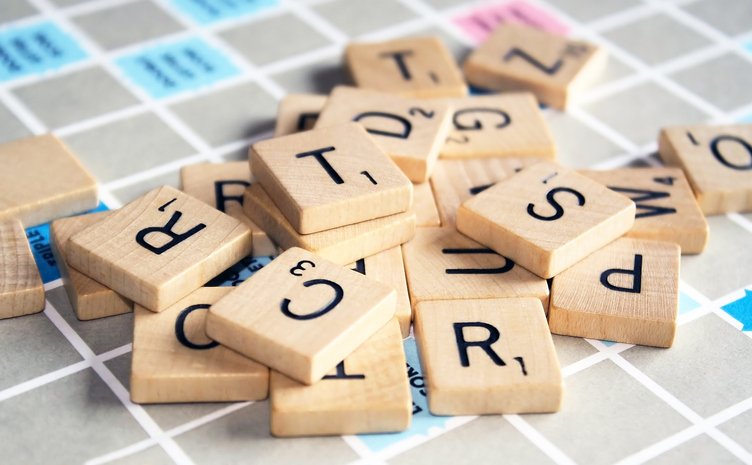
Are you ready to win at Scrabble? The strategy isn’t just about knowing more words than your opponent — it’s about playing smarter with the words you already know. Serious players win by managing the board, the tiles, and the clock, not by memorizing a dictionary. Here are the 10 rules that separate consistent winners from casual players.
1. Protect the premium squares — don’t hand them to your opponent
Triple-word and triple-letter squares next to an open letter are landmines. Before you place a word, check whether it opens up a premium square your opponent can exploit on their next turn. A modest score now is often better than setting up your opponent for a 30-point play immediately after.
2. Play defense as often as you play offense
New players focus entirely on maximizing their own score. Stronger players ask a second question every turn: *what does this move give my opponent access to?* If your best-scoring option opens a triple-word square along an edge, a slightly lower-scoring alternative that closes off the board is often the better play.
3. Learn the 2-letter and 3-letter words cold
Short words are the connective tissue of a strong Scrabble board. They let you play parallel to existing words, scoring in two directions at once, and they’re often your only legal move when your rack is full of awkward letters. A player who knows all the valid 2-letter words (there are about 100) has far more options on a crowded board than one who doesn’t.
4. Don’t hoard your S and blank tiles
New players often save their S tiles and blanks, waiting for the “perfect” play. Meanwhile, the board fills up and those tiles become harder to use well. Blanks and S tiles are strongest when played proactively — an S at the end of an existing word for a cheap parallel play, or a blank used to unlock a 7-letter bingo, is usually worth more than waiting.
5. Balance your rack after every turn
After you play, look at what’s left in your hand. A rack heavy in vowels (A, E, I, O, U) or heavy in consonants is weak. If you’re holding four vowels, prioritize plays that use two or three of them, even for a smaller score, so your next draw has room to balance out.
6. Track approximately how many high-value tiles are left
There’s only one each of J, Q, X, and Z, and two blanks in the entire set. Once you’ve seen a few of these tiles played, you know your opponent is less likely to draw one. This affects how cautiously you need to defend high-value squares in the later stages of the game.
7. Look for parallel plays, not just extensions
Beginners tend to only look for ways to extend from a single letter already on the board. Stronger players scan for parallel plays — placing a whole word directly next to an existing word so that multiple new words form at once (your new word, plus a series of small 2-letter words running perpendicular). This is consistently one of the highest-scoring patterns in the game and is easy to miss if you’re not looking for it.
8. Don’t chase a bingo at the cost of tempo
A 7-letter bingo (using all your tiles in one turn) earns a 50-point bonus, and it’s tempting to hold your rack together for one. But if you pass up several turns of solid scoring while waiting for the perfect bingo letters, you can lose more tempo than the bonus is worth. Take the bingo when it’s there — don’t force it.
9. Use a word unscrambler as a study tool, not just a solver
The fastest way to learn new playable words is to unscramble your own rack after a game and see what you missed. Over time, this builds pattern recognition — you’ll start seeing those words at the table without needing to look them up. Try it here with any 7 or 8 letters you remember struggling with.
10. Play the board, not just your hand
The single biggest jump in skill happens when players stop asking “what’s my best word?” and start asking “what does the board allow, and what should I deny my opponent?” Every square has value beyond the immediate points — some open up future plays, some close them off. Reading the board this way is what turns a good vocabulary into consistent wins.
——————–
Not sure if a word you’re considering is valid, or what it even means? Use our word unscrambler to check your options, or look up any word’s definition in our word dictionary.